


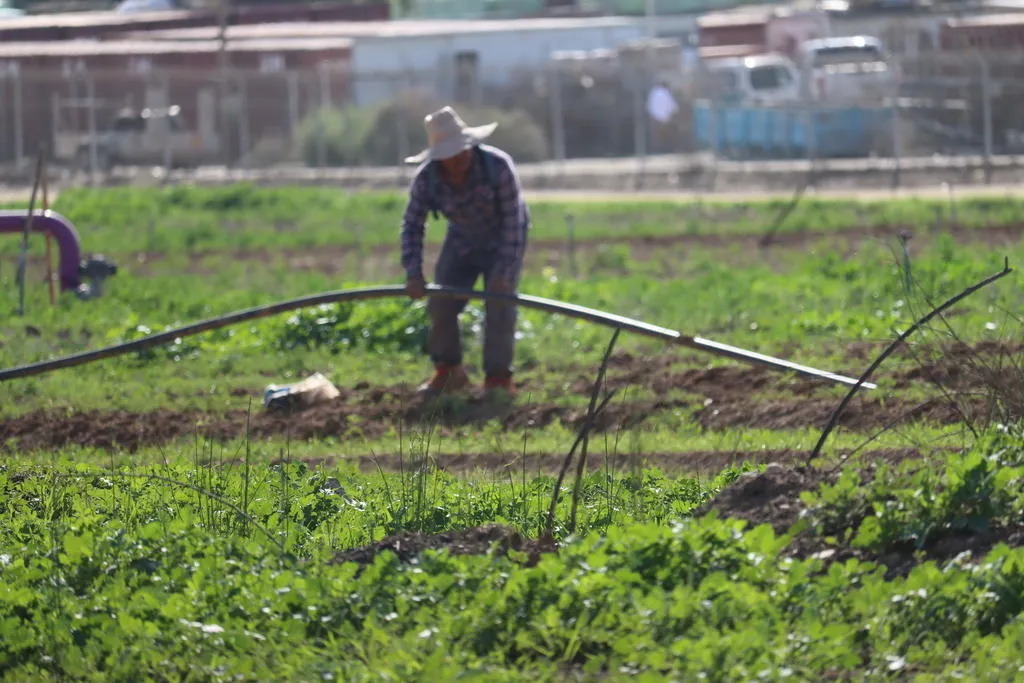
Israeli AI Breakthrough Could Unlock New Possibilities for Agriculture
Israeli researchers in Jerusalem developed BBERT, an AI tool that identifies unknown bacterial DNA, potentially revolutionizing agriculture by improving soil…
Israeli researchers in Jerusalem developed BBERT, an AI tool that identifies unknown bacterial DNA, potentially revolutionizing agriculture by improving soil…
Hebrew University of Jerusalem receives $2.6 million for a six-year project studying how judges safeguard democracy in OECD countries.

Israeli and US researchers, including Hebrew University and Harvard, propose a new computational framework to integrate diverse Alzheimer's findings for…
UCLA and Hebrew University of Jerusalem forge deeper ties with agreements to expand academic exchanges and establish a biomedical research collaboration.

Scientists at Hebrew University of Jerusalem created a model for targeted tree planting, detailing when trees aid or hinder grass growth based on conditions.
Jerusalem's Dvash Group and Hebrew University partner to launch a $50 million venture capital fund for deep-tech startups.

Researchers at Hebrew University of Jerusalem, led by Prof. Ido Braslavsky, created BioPykrete, a reinforced ice 10x stronger for building in extreme cold.
Prof. Yehu Moran of Hebrew University's Life Sciences faculty has been elected to the European Molecular Biology Organization, a leading global research.

Researchers at Hebrew University of Jerusalem have developed an Israeli breakthrough, significantly reducing the cost of lab-grown steak by using less expensive.
Hebrew University and Hadassah Medical Center students are in Kenya for a new humanitarian training program, focusing on emergency medicine and pediatric.